|
 |
|
|
|

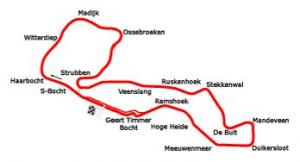
Left - The Assen Circuit:
Some musings from Ray Whitham:
With the Super 12 final imminent and the Barmey Army set to invade it's fair to assume that only real trainspotters among us might be aware that once again we are in the midst of that unique season of remarkable motorsport events, each enshrined in its singularly exceptional history, traditions and customs. Two events are on four wheels, two on two, all over and done in a period of just over four weeks, but was once three.
The F1 Grand Prix of Monaco, always in mid-May precedes the Indianapolis 500, always on Memorial Day, the United States equivalent of our Anzac Day and celebrated on the last Monday in May. How so similar yet so vastly different these two events are. The slowest F1 Grand Prix on narrow city streets and cliff edges, the world’s fastest car race in a speed bowl. Yet both were once part of the same world championship. And days later, an ocean away, the “First week of June” heralds motorcycling’s unparalled contribution to international motorsport with the Isle of Man TT races, also an event not now, but once, part of a world championship.
And also once, traditionally straight after the TT races, but not now, the Dutch TT at Assen to where “all roads lead….” remains amongst the most popular of all the world’s motor sport events.
Monaco became Europe’s first truly “Round the Houses” Grand Prix circuit in 1929 and to this day remains the least changed of all the worlds F1 circuits. Kiwi’s Bruce McLaren and Denny Hulme both won there and in more recent years Aaron Slight lived there. He kept fit riding his mountain bike on the high hills behind his cliff-top apartment often with neighbour Michael Doohan. Michael Schumaker lived just down the road.
In times past some F1 drivers skipped between Indy 500 practice and qualifying, which goes on for three weeks, and Monaco for the Grand Prix. Denny Hulme was one of those. He revelled in the history and hype of the Indy 500. He twice finished fourth in the world’s greatest race.
The time-honoured call “Gentlemen start your engines” has its origins at the Indy 500, traditionally raced in front of the biggest one-day sporting crowd in the world, on a circuit they call “The Brickyard” for the simple reason it was once made of bricks. A one-yard strip of bricks now crosses the track at the finish line, a present day reminder of what once was.
And before the field of 33 cars begins rolling at Indianapolis, across the Atlantic on a small island in the Irish Sea squeezed between the coasts of Northern Ireland and England, evening practice for the Isle of Man TT races begins. A week later racing will start, just a couple of races a day, over the next week. And, in keeping with tradition the last race will be the Senior TT on the final Friday afternoon. Almost like they have been doing it since 1907. The TT is an event awash in history, tradition and controversy. Only nine New Zealanders have ever won there.
The Dutch TT, now on the last Saturday in June rather than straight after the TT races is a very special occasion. It remains the only premier meeting in which the Grand Prix is raced on a Saturday, and it’s still called the Dutch TT. It’s been that way since it all began in 1927. And Assen itself, known as “The Cathedral” is the longest and narrowest of the Grand Prix circuits and is the only one to stage a Grand Prix every year since the inception of the world championship in 1949. The meeting traditionally hosts crowds in excess of 100,000 with over 150,000 regularly being exceeded. Tradition and history clearly counts for much. Hugh Anderson won a Grand Prix there.
Monaco was last week, practice starts for the Isle of Man TT on Saturday, the Indy 500 is on Monday, and Assen is now a month away. Motorsport history has gifted us some remarkable events. For many, Monaco, Indianapolis, the Isle of Man and Assen occupy a collectively unique place in the motor sport global calendar.